Sharon has published a book and many articles that examine varied aspects of urban sex work. These studies cover topics that include sex work and masculinity, violence, stigma, entrance into and exits from sex work, criminalization, identity formation, client recruitment, technology, and more.
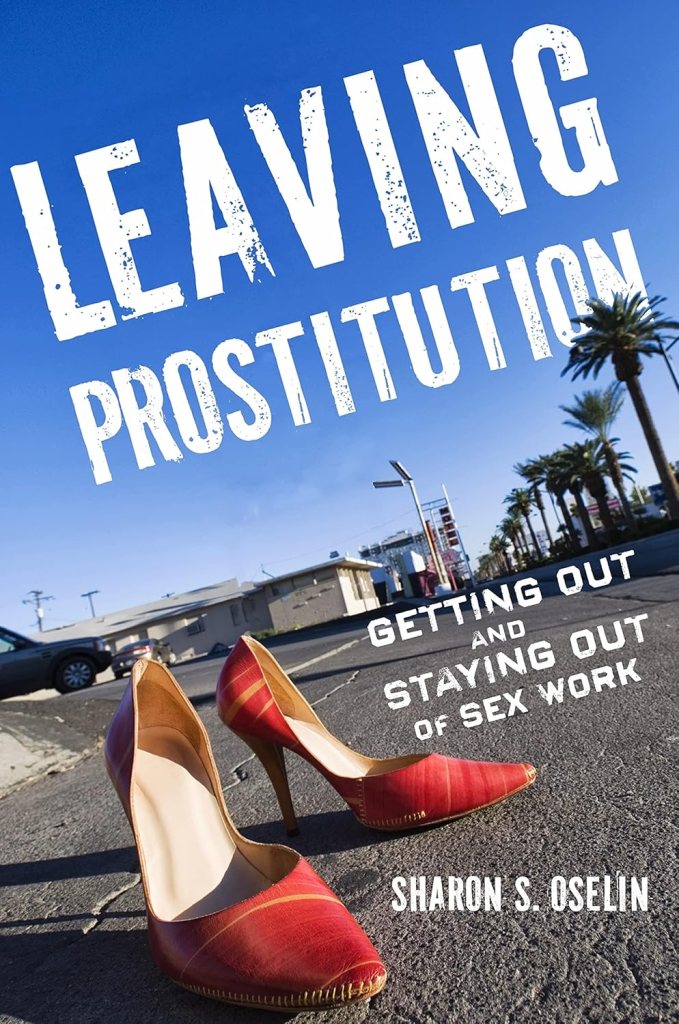
Sharon is the book author of Leaving Prostitution: Getting Out and Staying Out of Sex Work (New York University Press, 2014). Based on multi-site ethnographic data, this book exposes the dynamics that unfold between service provision organizations and female street sex workers who affiliate with them. To that end, this analysis assesses the process of exiting, the extent to which organizations facilitate or constrain this transition, and the agency of women sex workers along the way.
Journal articles on these above topics appear in Gender and Society; Work, Employment and Society; Sociological Forum; Sexualities; Sociological Perspectives; and elsewhere.
Select Articles
Oselin, Sharon S., and Katie Hail-Jares. 2022. “It’s Not Just Sex: Relational Dynamics Between Street-Based Sex Workers and Their Regular Customers.” Work, Employment and Society 36(5): 893–910.
Abstract
Establishing regular customers is an integral aspect of any service industry since they can increase profits and referrals. Most research on regulars within sex work focuses on indoor, high-end workers, who cultivate them through relational work practices. Yet very little is known about whether street-based sex workers employ these same tactics or even seek out regulars. This article draws upon interviews with 36 street-based sex workers in Washington, DC, USA. Sex workers dedicate considerable time and effort in order to retain regulars via relational work, noting such customers offer greater economic stability and fewer risks. Relational work also has disadvantages, exacerbated by the illicit and illegal nature of this work. Street-based sex workers navigate boundary setting and slippage as a part of retaining or rejecting regular clients. These findings have implications for policies that can reduce harms for sex workers and enhance their protections.
Oselin, Sharon S., and Kristen Barber. 2019. “Borrowing Privilege: Status Maneuvering Among Marginalized Men.” Gender & Society 33(2): 201–223.
Abstract
Research shows people confront social marginalization through work, yet this scholarship largely ignores people working in illicit markets. We address this gap by investigating how and to what end men in street prostitution “borrow” privilege from their more structurally advantaged clients. Drawing from interviews with men of color in street sex work, we show how they “status maneuver” to offset stigmatized identities tied to prostitution and to construct a masculinity that offers a greater sense of social worth within constrained circumstances. These men ironically rely on status differences between themselves and their white, wealthy men clients to undermine their own oppression and to create possibilities for momentary associations with hegemonic masculine privilege. This research shows how barriers between the powerful and powerless are permeable, and how social hierarchies serve as resources to cope with the inequitable conditions and stigma under which some people live and work.
Oselin, Sharon S. 2016. “You Catch More Flies with Honey: Sex Work, Violence and Masculinity on the Streets.” Sociological Forum 31(1): 203-222.
Abstract
Violence among inner-city men is a pressing social concern, and the central focus of much academic research. Many frame it as a phenomenon that certain men perpetuate—those who inhabit disadvantaged, impoverished communities—and argue it is linked to performances of “street” masculinity. In this article, I examine male street-based sex workers’ willingness to become embroiled in violent exchanges. In a departure from theoretical predictions, my findings reveal these men expend considerable effort to remain nonviolent with others immersed in the sex trade, a decision based upon their desire for the acquisition of capital as well as their calculation of risks. In doing so, they construct and perform a nuanced version of masculinity, which I call pacifist masculinity. Few studies analyze peaceful and conciliatory interactions among men in these contexts, an absence that only serves to reify assumptions about rampant hostility and aggression. I draw on interviews with 19 men involved in street prostitution in Chicago in 2012. This article contributes to a clearer understanding of male–male violence in high-risk environments, examines the prominent factors that inform decisions to assault others, and explores how such actions challenge hegemonic masculinity.
Oselin, Sharon S., and Ronald Weitzer. 2013. “Organizations Working on Behalf of Prostitutes: An Analysis of Goals, Practices and Strategies.” Sexualities 16(3/4): 445-466.
Abstract
Views on female prostitution are diverse and often hotly contested, both inside and outside academic circles. Some contend that prostitutes are universally exploited, while others argue that they are workers and should be recognized as such. Yet there is little analysis of the role that service-providing organizations play in this larger debate. This article examines programs that offer direct services to prostitutes–which we call prostitute-serving organizations (PSOs)–in order to document both the kinds of services they provide and to assess whether they engage in efforts to change larger social or legal arrangements that impact their constituents. The article draws on data from multiple sources, including the website content of 37 PSOs, 21 in-depth interviews with PSO staff members, and published secondary sources. The organizations are categorized in terms of their core perspective on sex work, which we link to one of the three main theoretical paradigms in the sex-work literature. We distinguish the different types of organizations, describe how their ideological stance impacts their goals, identify their main actions as service and/or advocacy, and suggest factors that account for these practices.
*graduate student
 Sharon S. Oselin, Ph.D.